


Tweets
- Tweets, current page.
- Tweets & replies
- Media
You blocked @ONS
Are you sure you want to view these Tweets? Viewing Tweets won't unblock @ONS
-
Pinned Tweet
For the first time we've brought together goods and services trade data in one interactive. Explore UK trade with the rest of the world http://ow.ly/oyEt50vbjIb pic.twitter.com/JGDzB0oE8D
Thanks. Twitter will use this info to make your timeline better. UndoUndo -
Office for National Statistics Retweeted
Today (September 26th) is the most popular day to be born in England and Wales! Happy birthday to everyone born today - See how your birthday compares in the graphic below
#PopStatOfTheDay http://ow.ly/qjCB50wrRlc pic.twitter.com/xi4W8HI31l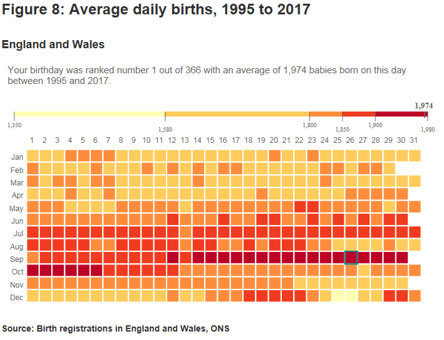 Thanks. Twitter will use this info to make your timeline better. UndoUndo
-
Every year the Business Register and Employment Survey (BRES) gives a detailed snapshot of employment by industry and region across the UK. Read David Freeman’s blog post on BRES – setting out what’s available and what’s to comehttp://ow.ly/yOoh30pBT1C
Show this threadThanks. Twitter will use this info to make your timeline better. UndoUndo -
The electricity, gas, steam and air conditioning industry had the highest percentage increase in employees (4.9%) The biggest fall was in arts, entertainment and recreation, at 2.3% http://ow.ly/oco530pBT0e
Show this threadThanks. Twitter will use this info to make your timeline better. UndoUndo -
Wales had the highest percentage increase in employees in 2018 (+2.4%) Only the North East and West Midlands saw decreases, down 0.8% and 0.7% respectively http://ow.ly/l9EE30pBSZr pic.twitter.com/wqCCoFKvmO
 Show this threadThanks. Twitter will use this info to make your timeline better. UndoUndo
-
There were 30.5 million employees in the UK in 2018, up 229,500 from 2017 http://ow.ly/8ZJq50wrRkf
Show this threadThanks. Twitter will use this info to make your timeline better. UndoUndo -
Our kick-off event to work out a value for statistics with the
@UNECE comes to an end today but the project carries on. Ed Humpherson from@UKStatsAuth explains why this is important in our recent bloghttp://ow.ly/6lgr50wqFgZThanks. Twitter will use this info to make your timeline better. UndoUndo -
Office for National Statistics Retweeted
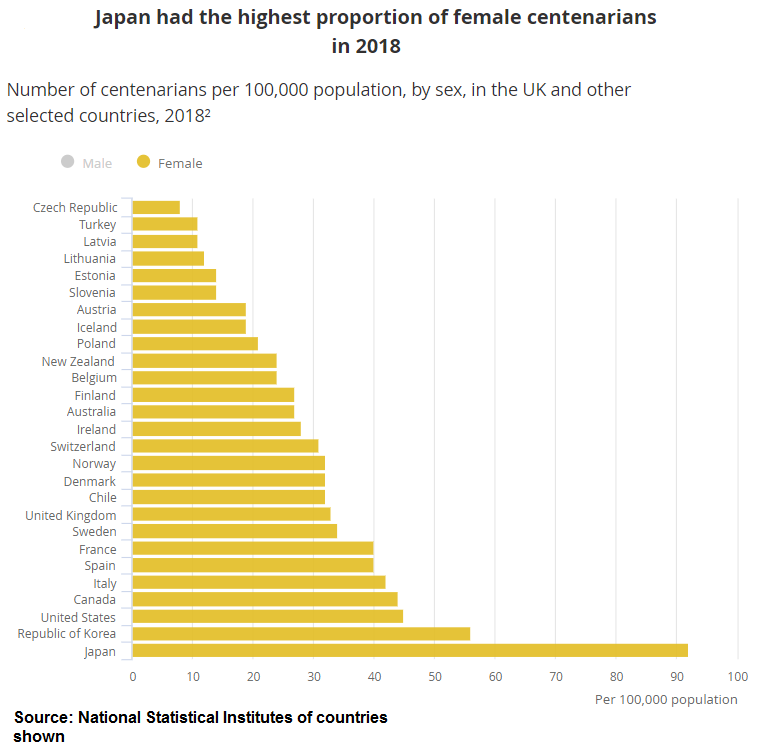
The proportion of female centenarians was nearly three times higher in Japan than in the UK in 2018 - Japan has the highest number of people aged 100 years and over than anywhere else in the world http://ow.ly/jMi530pBsq1 pic.twitter.com/gYoE9ZJaFm
 Show this threadThanks. Twitter will use this info to make your timeline better. UndoUndo
-
Office for National Statistics Retweeted
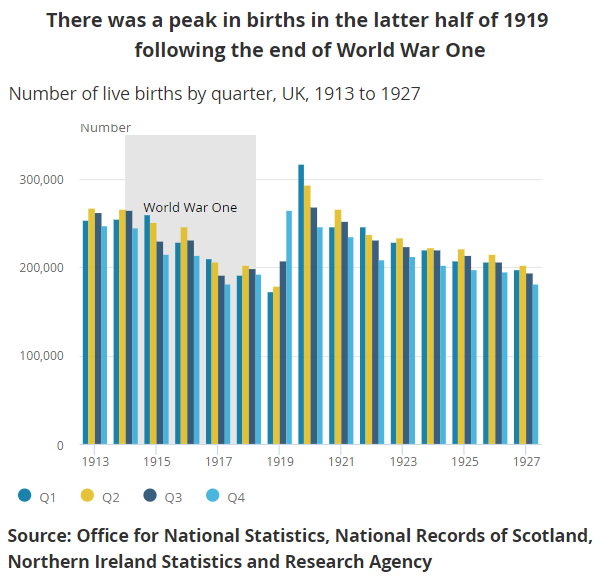
The impact of World War 1 a hundred years on – lower number of births has driven the decrease in the number of centenarians to 13,170 in 2018 http://ow.ly/iLNu50wq7cx pic.twitter.com/QVCEAG6mJY
 Show this threadThanks. Twitter will use this info to make your timeline better. UndoUndo
-
Meanwhile, the probability of reaching 90-years-old remained the same. One in five boys and one in three girls born between 2016 and 2018 can expect to reach 90-years-old http://ow.ly/ZQKl30pBsel
Show this threadThanks. Twitter will use this info to make your timeline better. UndoUndo -
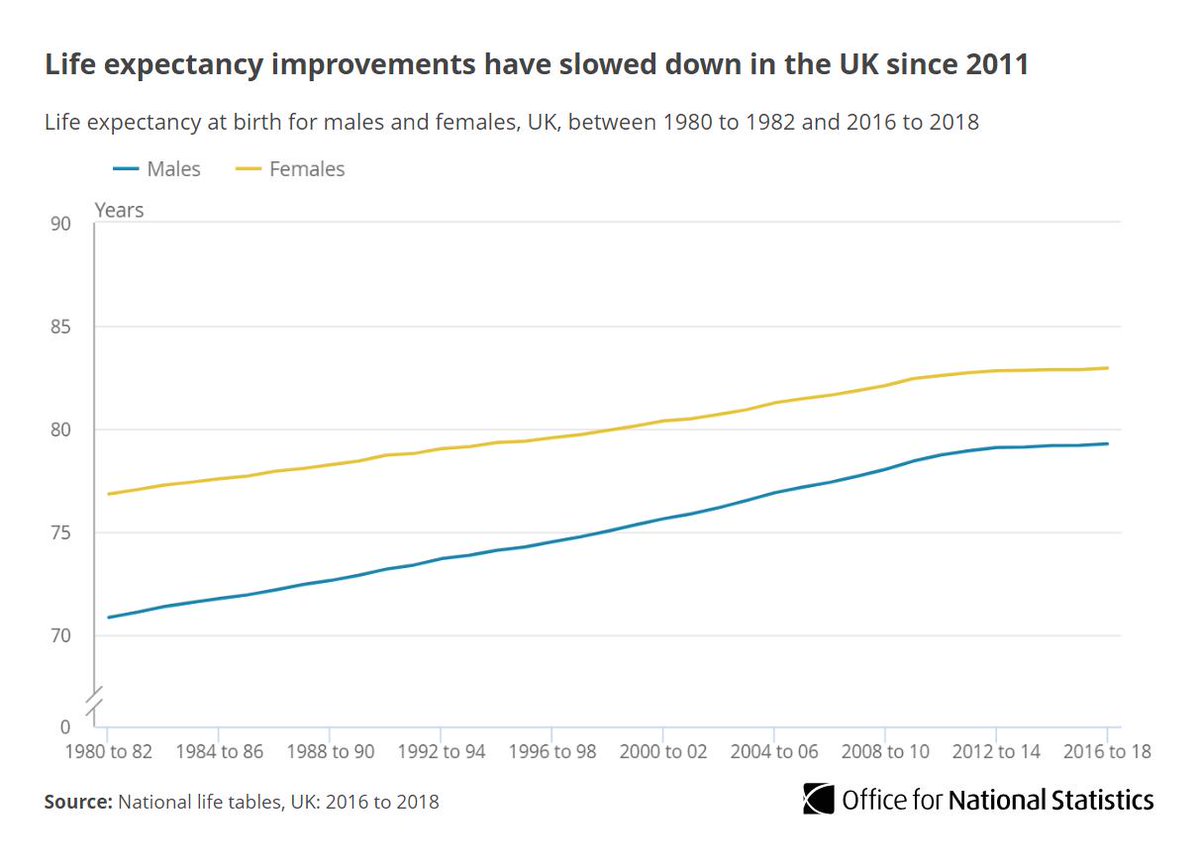
However, the relatively low increases show the slowdown in life expectancy improvements is continuing (since 2011) http://ow.ly/au5m30pBsc9
Show this threadThanks. Twitter will use this info to make your timeline better. UndoUndo -
Life expectancy at birth improved slightly since the last three-year period (2015 to 2017) – 3.7 weeks for males and 4.2 weeks for females http://ow.ly/97VF30pBsa4 pic.twitter.com/Qv0BzZxuU7
 Show this threadThanks. Twitter will use this info to make your timeline better. UndoUndo
-
Life expectancy at birth in the UK in 2016 to 2018 was 79.3 years for males and 82.9 years for females http://ow.ly/yxHj50wq6b2 pic.twitter.com/4ocuo7MTSS
 Show this threadThanks. Twitter will use this info to make your timeline better. UndoUndo
-
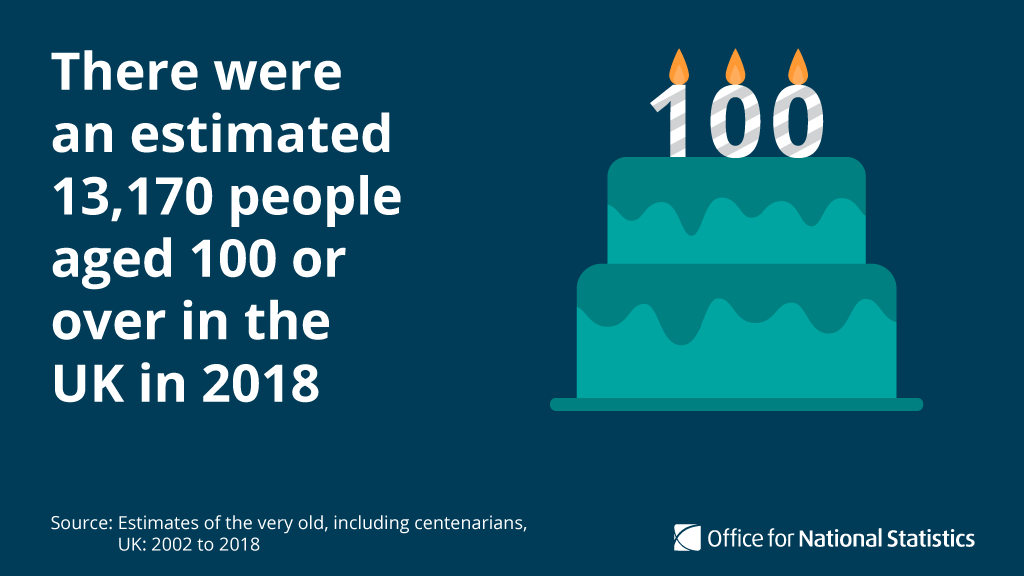
An estimated 13,170 people in the UK were aged 100 or over in 2018, a 5% decrease since 2017. This number is driven by the low number of births in WW1 http://ow.ly/SB7g30pBrXF pic.twitter.com/FntZB8rtg7
 Show this threadThanks. Twitter will use this info to make your timeline better. UndoUndo
-
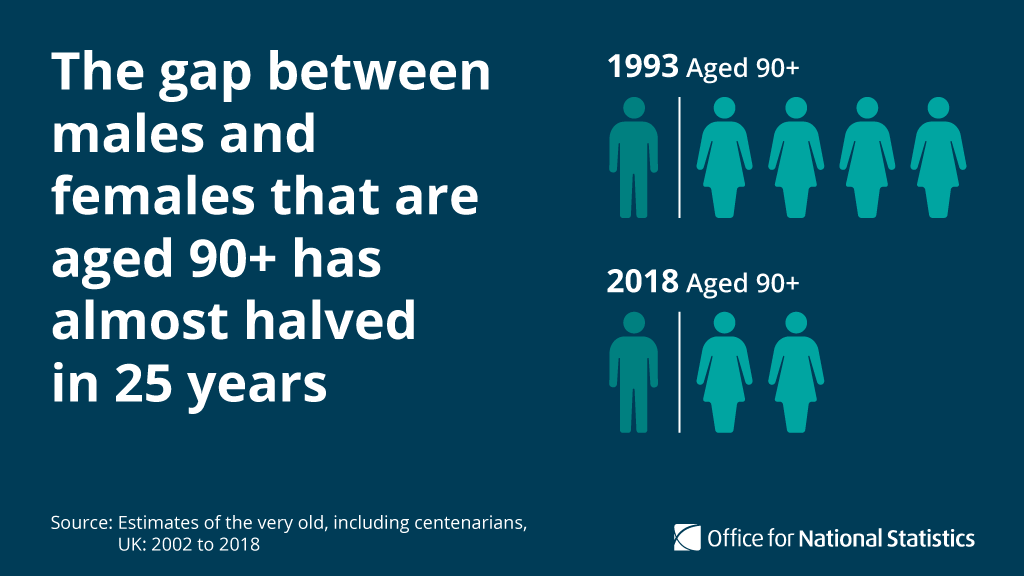
More men are reaching these ages in recent years. Last year there were just over two women to every man aged 90+ but 25 years ago there were just over four women to every man http://ow.ly/kTBr30pBrUu pic.twitter.com/A0a3OPCXYe
 Show this threadThanks. Twitter will use this info to make your timeline better. UndoUndo
-
The size of the population aged 90+ in the UK grew from 579,776 in 2017 to 584,024 in 2018 http://ow.ly/fIHy50wq5ap pic.twitter.com/4piajznK2s
 Show this threadThanks. Twitter will use this info to make your timeline better. UndoUndo
-
Office for National Statistics Retweeted
Public borrowing in 2018/19 was a 12 year low of £41.4 billion; while at the end of March 2019 debt stood at a record high of £1,773.4 billion. Reducing deficit is not the same as reducing debt. Here’s a useful explainer - http://ow.ly/3lkj30pAZBw
Show this threadThanks. Twitter will use this info to make your timeline better. UndoUndo -
Overseas residents spent £2.3 billion on visits to the UK this June, 13% more than in June 2018. Meanwhile UK residents spent £4.5 billion on visits overseas, 1% more than last June http://ow.ly/KDX530pAZlj pic.twitter.com/xqJDWN66Pt
 Show this threadThanks. Twitter will use this info to make your timeline better. UndoUndo
-
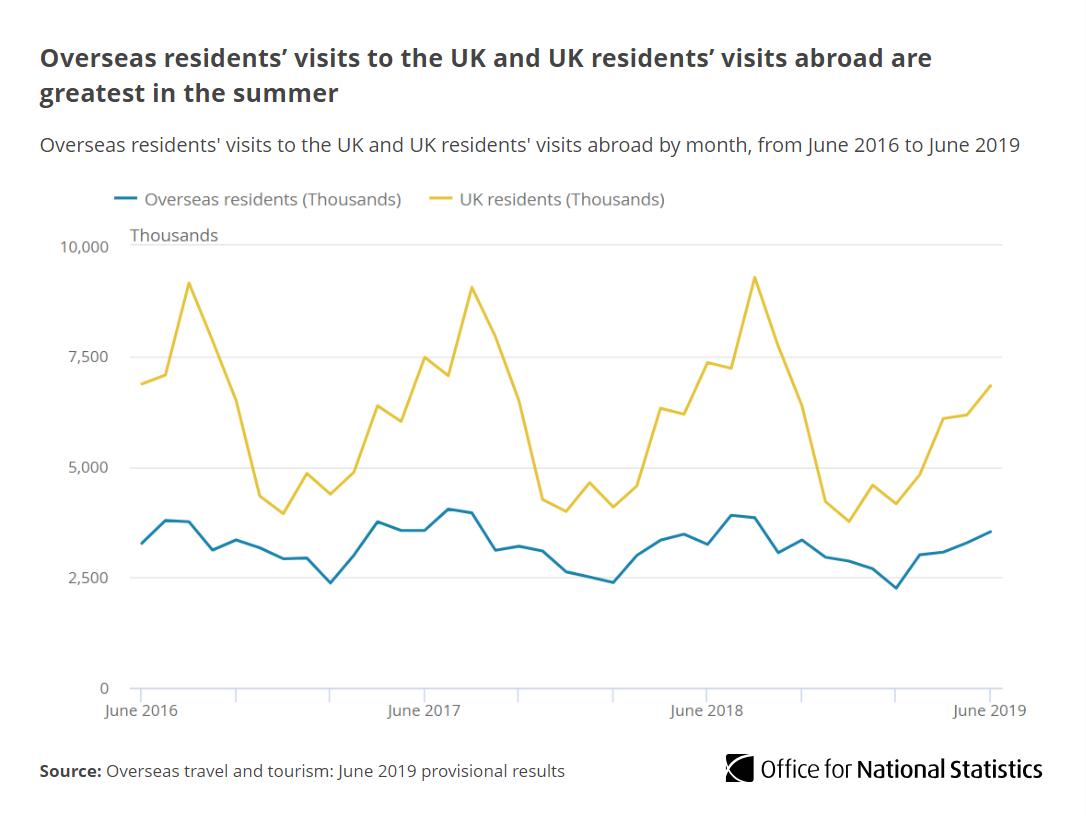
There were 3.5 million visits to the UK by overseas residents this June, 9% more than in June 2018. UK residents made 6.8 million visits overseas, 7% fewer than last June http://ow.ly/LCVB50wo2gN pic.twitter.com/r7HNpEnb3g
 Show this threadThanks. Twitter will use this info to make your timeline better. UndoUndo
-
This month we are introducing new treatment of student loans and pensions into the public sector finances. For more details see our stat bulletin http://ow.ly/b6rU30pAZf2
Show this threadThanks. Twitter will use this info to make your timeline better. UndoUndo -
Public sector net debt (excluding public sector banks) was £1,779.9 bn at the end of August 2019. This is an increase of £24.5 bn but a decrease of 1.5 percentage points of GDP on August 2018 http://ow.ly/pGNH30pAZdG
Show this threadThanks. Twitter will use this info to make your timeline better. UndoUndo


Loading seems to be taking a while.
Twitter may be over capacity or experiencing a momentary hiccup. Try again or visit Twitter Status for more information.
